Poetry

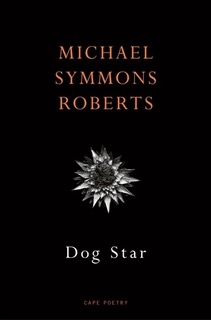
Dog Star

An inviting and poignant new collection exploring our increasingly turbulent relationship with nature, from award-winning poet Michael Symmons Roberts

‘I love Michael Symmons Roberts’ poetry’ Jeanette Winterson

Dog Star is a book of linked poems rooted in encounters with real, imagined or mythical birds, trees, fish, flowers, bacteria, chimeras – ancient connections reshaped by technological and political change and critically endangered by species and habitat loss.

In Roberts’ previous work, his poems are attentive to glimpses of grace and presence, but always embodied and grounded. In this new book, that attention is sharper and more urgent than ever, at a time when the essential spiritual relationship between humanity and other forms of life is broken or lost. In a line from his collection Drysalter – ‘there is no way to the soul but through the body’ – he sets out the bearings for these new poems as attempts to tap into what D.H. Lawrence called ‘heaven’s wolfish, wandering electricity.’

Some encounters in Dog Star are head-on, face-to-face, some are more slant, distant, missed connections. There’s an elegiac sequence for the poet’s mother with each step measured in animals, an extended riff on the world as an aquarium and our lives seen through water – creatures dead and living, met in the flesh or mediated via film or stories. This is a profound, remarkable book by one of our major poets.

‘The clearest and purest voice currently sounding in British poetry’ Carol Ann Duffy

‘An outstanding writer’ Sunday Times

Extract from Dog Star

RED SMOKY HEARTS

Having been in hibernation for so long,
for millennia of winters,
– though it felt like an instant,
too quick for atomic clocks –
a wakening starts, no rush, these hearts
have all the time they need.
The ones kept under stone slabs push them up,
wrinkled ones like prunes in jars stir,
those dried to husks in urns,
or atrophied to damsons
pulse and jitter.
Close by, out of sight for now,
drapes are torn from windows,
locks picked, tables laid, doors thrown open.
It all counts, nothing is forgotten.
 

Libretti

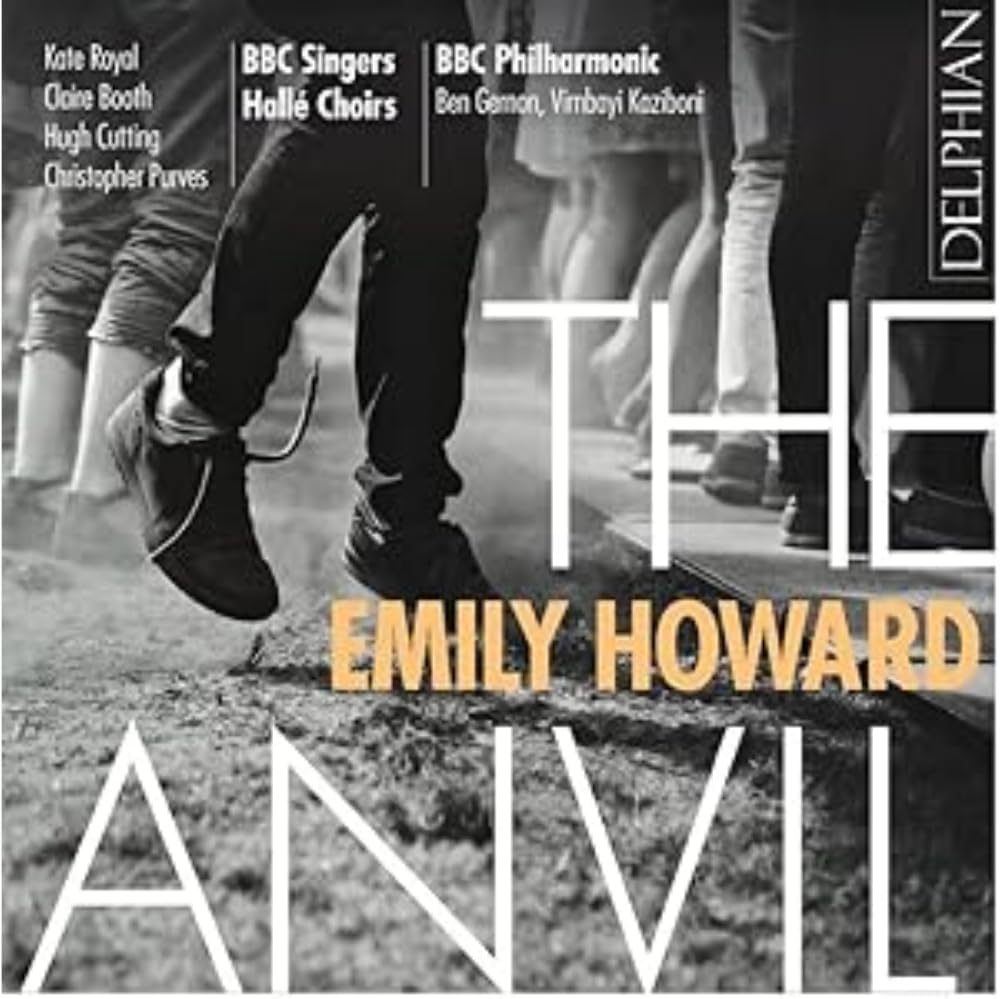
Emily Howard: The Anvil

The imagined sounds of mass protest run through composer Emily Howard’s and poet Michael Symmons Roberts’s The Anvil, commissioned by BBC Radio 3 and the Manchester International Festival to mark the bicentenary of the 1819 Peterloo massacre, in which crowds protesting for universal suffrage in St Peter’s Fields, Manchester, were brutally crushed.

To a solo soprano who narrates and remembers and a baritone who seems caught in the action, the work adds the immense forces of four choirs – each given music tailored to its particular capabilities, from professional to amateur – and the BBC Philharmonic to ask: what future was being forged in the tragic events that took place that day?

A second collaboration between Howard and Symmons Roberts, Elliptics (nominated for a 2023 Ivors Award), is quieter, more elegiac: a meditation on love and death, and on what we hope will survive.

Reviews of Emily Howard: The Anvil

“The Anvil succeeds in depicting the horror and devestation of Peterloo. The use of musical gestures, including vivid dynamic juxtopositions, Ivesian superimpositions, popular melody and hymn tunes such as Tallis Canon, is undoubtedly effective … [Elliptics]has an elliptical ambience … this creative complex of contrast, capraciousness and atmospheric orchestral accompnaiment that contributes to the work’s coherence and to its broader mood of melancholic introspection”

Gramophone

“The Anvil is an immersive and emotional experience … in ‘The Field Turns Inside Out, the orchestral assult mirrors the flash of sabres and crush of hooves, voices crying out as chaos reigns. Visceral and brilliant”

BBC Music Magazine

“Small and gentle aren’t on the agenda in Emily Howard’s The Anvil….Howard’s musical style, jangly and adversarial, entirely suits her subject: the 1819 Peterloo Massacre, where troops charged into a crowd that was demonstrating voting reforms … The soloists Kate Royal and Christopher Purves, the Halle choirs, the BBC Philharmonic and conductor Ben Gernon thrust us magnificently into the fray”

The Sunday Times

Contents of Emily Howard: The Anvil

Release Date: 29 September 2023
Catalogue No: DCD34285
Total playing time: 1:06:54

Recorded live on 7 July 2019 (The Anvil) & 29 October 2022 (Elliptics) at The Bridgewater Hall, Manchester

Producer: Tim Thorne (The Anvil), Matthew Bennett (Elliptics) Engineer: Stephen Rinker
24-bit digital editing: Stephen Rinker (The Anvil), Matthew Bennett (Elliptics)

24-bit digital mixing: Paul Baxter
(The Anvil), Matthew Bennett (Elliptics)
24-bit digital mastering: Paul Baxter

Non-fiction

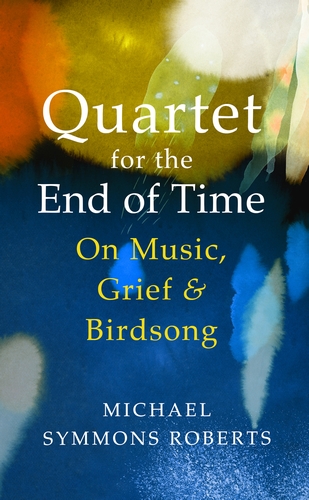
Quartet for the End of Time

A personal reckoning with grief, doubt, faith and poetry set to one of the most celebrated musical works of the twentieth century, from the award-winning poet and librettist.

The story goes like this: on a freezing winter night in 1941, a new piece of chamber music was performed to a crowd of prisoners of war on a three-stringed cello, clarinet, violin and pub piano with sticky keys. It was the premiere of Olivier Messiaen’s Quatuor pour la fin du Temps.

Listeners since then have been captivated by the ecstatic music and mythology of Messiaen’s masterpiece. Michael Symmons Roberts’ own lifelong fascination with the Quartet– having chanced upon it in a record shop in his late teens and fallen in love with its title – leads him on a quest to understand its enigmatic power. His fascination – at times frustration – with Messiaen’s vision opens into an exploration of grief, of personal faith and doubt, of the end of time and what may lie beyond it. Interwoven with poetry and wit, this book is an expansive evocation of music, loss, hope and time, seen through the lens of the Quartet’s technicolour, apocalyptic vision.

Quartet for the End of Time is a moving, intimate and unforgettable book, attentive to ways of listening – in our noisy world – to birdsong, music, poems and radio silence, and to the call and response that we may find.

Reviews of Quartet for the End of Time

‘This wonderful book should help to win the strange, bird-fixated composer new admirers’

Spectator

‘Symmons Roberts’ prose…is silky and emotive,with his success in weaving the personal strands with the musical partly owed to the deep connections wrought by his poems, each one seemingly chosen to heighten our understanding of what precedes it’

Financial Times

‘In this remarkable book, Symmons Roberts explores his complex ongoing relationship with Messiaen’s visionary work , alongside reflections on grief, faith and the creative process… Symmons Roberts writes with wit, beauty and piercing insight… In responding to Messiaen’s radiant masterpiece, Symmons Roberts has created a masterpiece of his own’

BBC Music Magazine

“He displays an amazing talent for intimacy on paper – sometimes, it almost takes your breath away.”

The Observer

“An outstanding writer.”

The Sunday Times

Awards for Quartet for the End of Time

Big Issue Book of the Year for 2025

https://www.bigissue.com/culture/books/quartet-for-the-end-of-time-book-of-year-2025/

Poetry

TAKK

Limited edition Fine Press publication in collaboration with painter Jake Attree


Poetry

Ransom

Ransom, the new collection from Michael Symmons Roberts, is an intense and vivid exploration of liberty and limit, of what it means to be alive, and searches for the possibility of hope in a fallen, wounded world. The poems in Ransom display all the lyrical beauty and metaphysical ambition for which his work is acclaimed, but with a new urgency, a ragged edge to what the Independent described as his ‘dazzling elegance’. At the heart of this new book are three powerful sequences – one set in occupied Paris, one an elegy for his father, and one a meditation on gratitude – that work at the edges of belief and doubt, both mystical and philosophical. The idea of ‘ransom’ is turned and turned again, poem by poem, seen through the lenses of personal grief and loss, cinematic scenes of kidnap and release, narratives of incarnation and atonement. This is a profound and timely book from one of our finest poets.

Awards for Ransom

Poetry Book Society Recommendation

Financial Times Books of 2021 pick

Extract from Ransom

THE NOTE

I had in mind your captor
at a hotel desk with an inverse view

(no ocean vista, just bins
and air-con viscera)

tongue out to concentrate,
scissors and glue,

a stack of newspapers
to spell out where and when,

the cost of your release.
Instead, when it came

the note was the start of a song,
single and sustained,

so I put it on repeat,
as I walked, drove, worked, ate,

trying to tease out bird-calls,
timbre of passing cars,

dialects of distant dogs,
to figure where they held you.

When you walked in,
you scared the life out of me.

Libretti

Clemency

Clemency – in collaboration with composer James MacMillan – was premiered at the Royal Opera House in London in May 2011. Co-commissioned by the Royal Opera House, Britten Sinfonia, Scottish Opera and Boston Lyric Opera, it sold out its first run at the ROH.

The first production was directed by Katie Mitchell, and designed by Alex Eales. The conductor was Clark Rundell.

Reviews of Clemency

“Equally powerful in narrative and in musical terms, this work seems to have hit the ground running.”

Edward Bhesania, The Stage

“A terrifically intense, focused and inspired musical work.”

Jessica Duchen, The Independent

“Subtly haunting and quietly powerful, it is a parable of God’s will in the world. This is an opera which leaves a lasting effect, and I want to hear it again soon.”

Rupert Christiansen, Daily Telegraph

Libretti

The Sleeper

Commissioned opera for Welsh National Opera’s ‘Max’ Programme, working with composer Stephen Deazley.

Libretti

Winterreise

New English translations of the poems in Schubert’s ‘Winterreise’, performed by Mark Padmore. Commissioned by Aldeburgh Festival, London’s South Bank Centre and the Lincoln Centre, New York.

These new translations were performed in 2009 as part of a production devised and directed by Katie Mitchell, under the title ‘One Evening’.

Reviews of Winterreise

One Evening does lend a jolt of immediacy to Winterreise by using English translations of Muller’s German words by the poet Michael Symmons Roberts…. Here is his rendering of the first verse of Der Greise Kopf (The Hoary Head), in which the traveler describes how the frost turned his hair white:

My hair became a shock of salt,
The frost had left me older.
At last I looked the way I felt,
Kind death was at my shoulder.

You could sense a jolt of recognition throughout the theater as this New York audience heard the familiar Schubert songs sung in English.’ Mr Symmons Roberts’ translations deserve to be heard outside this production.”

Anthony Tommasini, New York Times

“Padmore sings the songs in an admirable translation by Michael Symmons Roberts. Why don’t more singers do this? We hung on every word, not needing to scan programmes or surtitles.”

Barry Millington, Evening Standard

Libretti

Chosen

Written in 2003 for George McPhee’s 40th anniversary as Director of Music at Paisley Abbey in Scotland, this piece sets the first of a trilogy of nativity poems by Michael Symmons Roberts.

Reviews of Chosen

“James MacMillan’s ‘Chosen’, adding to his increasingly compelling body of choral compositions, makes striking use of unison and harmony contrasts, and has a searingly placed climax.”

Terry Blain, BBC Music Magazine

Libretti

Parthenogenesis

A chamber opera with James MacMillan, a commission by the Britten Sinfonia and Cambridge University. Performed at 2001 Edinburgh Festival, and in Spain and Italy. Broadcast on BBC Radio 3. Re-staged in a new production directed by Katie Mitchell at the Royal Opera House in 2009.

Reviews of Parthenogenesis

“Roberts’ punchy text is engaging, allusive and teasingly ambiguous, while MacMillan’s music adds a tortuous dimension, wracked with turbulent open emotions, and periods of gorgeous serenity.”


Kenneth Walton, The Scotsman

“Michael Symmons Roberts’ thoughtfully imagined poetic libretto spells out the private thoughts of a parthenogenetic mother and her worried guardian angel (Lisa Milne and Christopher Purves, intense and lyrical throughout), enclosed within spoken commentaries by the daughter who knows herself to be her mother’s almost-sister and perfect double (Anastasia Hill) troubled down to rare expressive depths”


David Murray, Financial Times